Home / Tribal Art / African
African Tribal Art
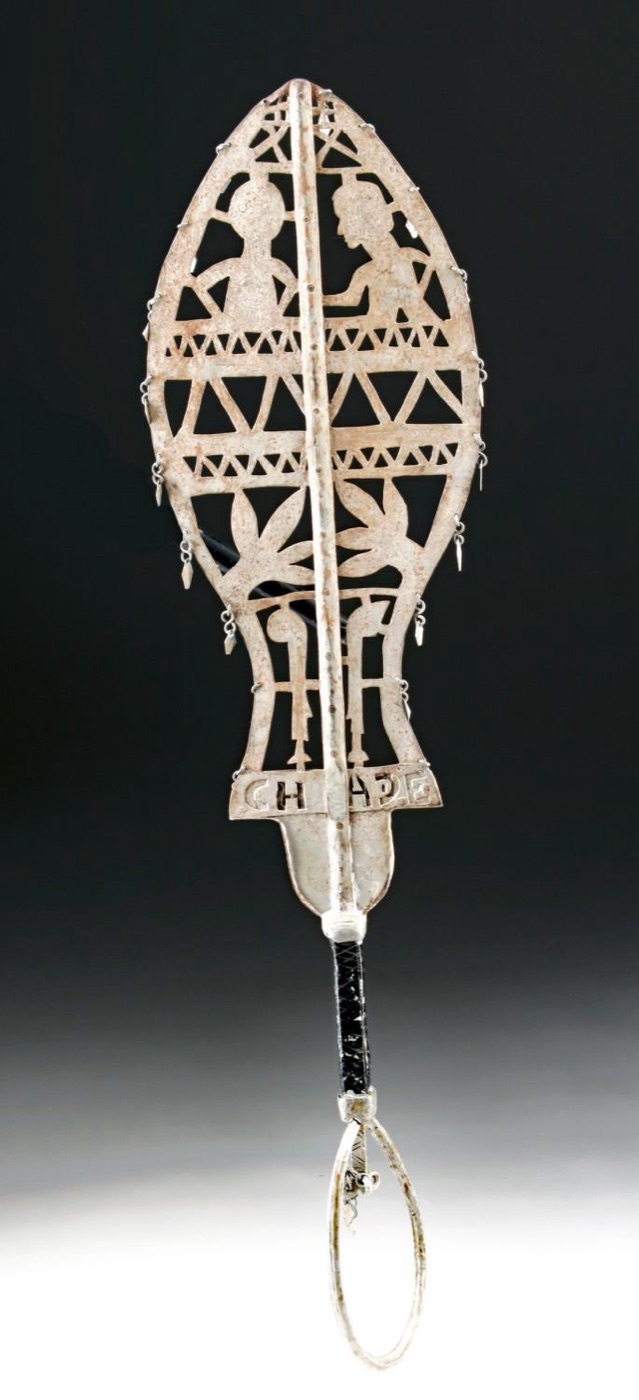
Early Benin Iron / Brass Eben Royal Sword-Scepter
- Culture
- Edo
- Origin
- Nigeria
- Period
- early 20th century CE
- Object
- Scepter
- Materials
- Iron, Brass, Pigment
- Dimensions
- 31.5" L x 8" W (80 cm x 20.3 cm)
- Catalogue
- TRB-270
West Africa, Nigeria / Benin, Edo culture, ca. early 20th century CE. An iron and brass ceremonial sword scepter, known as an eben, customarily wielded by the Oba or king as a symbol of power and authority during ritualized court ceremonies. Made from several types of metal, the material sourced from imported industrial scrap such as automobile and machinery parts - this example features an elaborate openwork blade with angular and figural cutouts, including stylized profile portraits and vegetal motifs, all accented by dangling metal ornaments. The shoulders have cut out letters: "CHADE" on one side and "OR" on the other, perhaps indicating origin or symbolic affiliation. The flat, leaf-shaped form culminates in a tapered handle painted black, and a loop encircling dangling pieces on the pommel. This type of royal regalia was held and spun by the king during dances, signaling his communicative and divine authority. Size: 31.5" L x 8" W (80 cm x 20.3 cm) The eben sword is traditionally reserved for the Oba (king) and serves as a powerful symbol of his authority. During elaborate dance ceremonies, the King will often raise and spin the eben dramatically before his throne at the ritual's climax. This particular example is crafted from various metals - this material embraced by the Benin in the early 20th century, who were fascinated by the industrial remnants of European technology, including parts from automobiles and airplane engines. Such use became especially prominent in ceremonial objects during the 1930s. The intricate openwork design features figural silhouettes at the top that appear to be in active dialogue, reflecting the king's role as both a spiritual and political communicator. The symbolism throughout the piece - especially the presence of these figures and the inscribed base - reinforces the owner's elite status, authority, and the sacred right to wield ceremonial regalia. Ultimately, this scepter stands as a testament to the divine essence and communicative power of kingship.